

Family guide to Death Valley in one day: must-see spots, easy hikes, and essential travel tips in a stress-free itinerary.
*We use ads so we can pay for our travels and continue to bring you free travel advice. We also use affiliate links. If you make a purchase through them, we may receive a small commission at no cost to you. See our Privacy Policy for more information.
This spring, we headed out on a short road trip to the desert landscapes along California’s eastern edge. The plan was to cross the Sierra Nevada and visit the hottest place on Earth: Death Valley National Park.
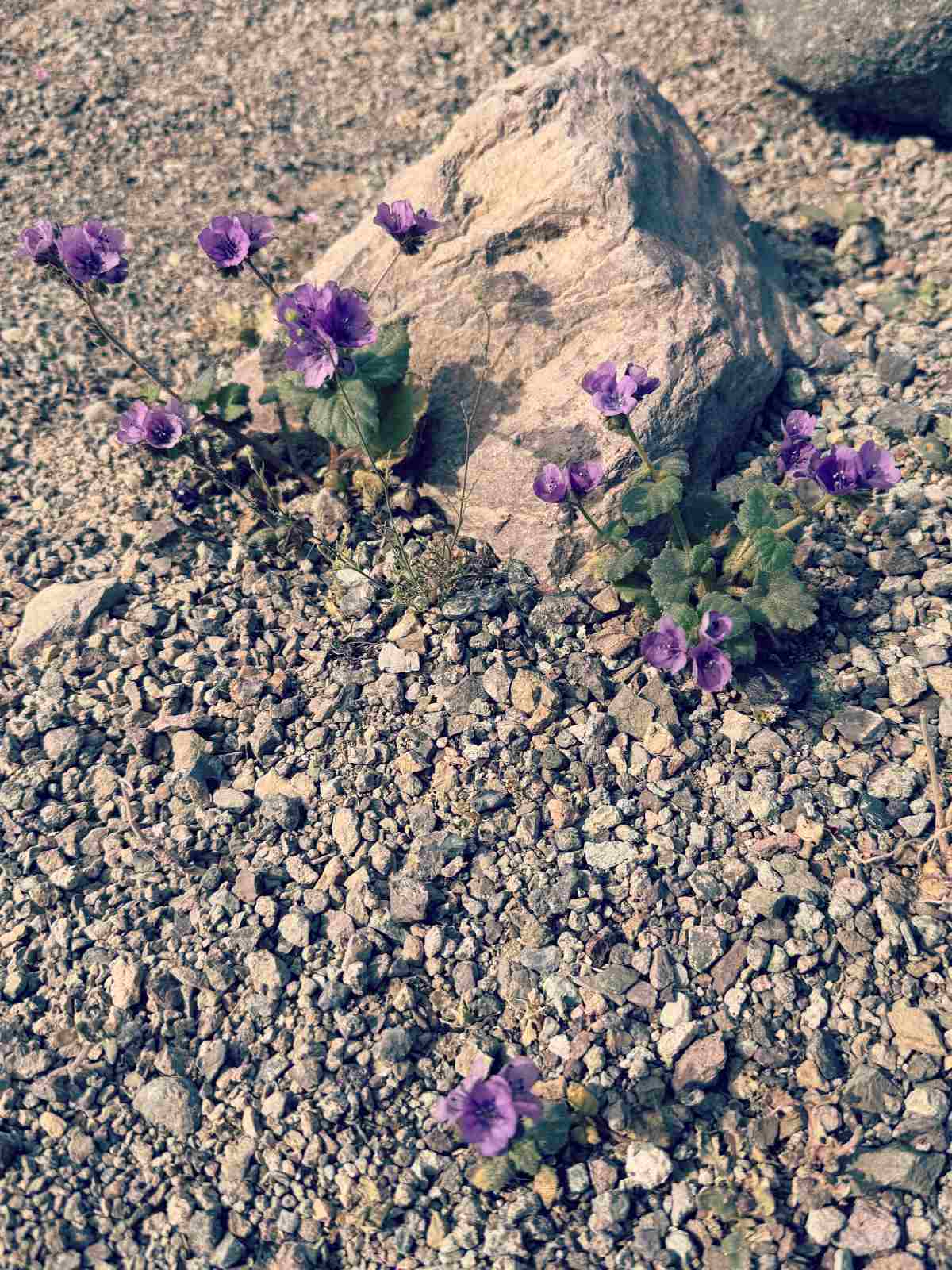
We’ve visited Death Valley National Park before, but this time we made it there in early spring. It’s a great time for a desert adventure as tempetures are still manageable, and nature is just waking up from winter. The few flowers that grow in the desert begin to bloom, and the shrubs turn green. After last winter’s record rainfall, there were even reports of a “super bloom” in the park.
Unfortunately, our trip coincided with the year’s first heat wave. Temperatures were nearing 100F (38˚C) in the afternoons which made hiking with kids difficult. The peak bloom had likely also already passed, but we still got to see some flowers and a rare lake that had formed on the salt flats.
Heath waves like this are normal in California, though they usually arrive later in the spring. Despite that, we had a great visit to Death Valley and couple other nearby parks too.
What is Death Valley?
Death Valley National Park is a desert valley located next to the Sierra Nevada, near the Nevada state line, with parts of it extending into Nevada. It’s known as both the hottest place on Earth and the lowest point of North America. The world’s highest recorded temperature; 134F (56.7 ˚C) was measured here in 1913.
During the summer months, temperatures in the valley regularly reach 100-122F (40-50˚C), while winter nights can occasionally drop below freezing. Seasonal rains can also cause flooding, making conditions quite extreme.
The name “Death Valley” dates back to the Gold Rush era, when prospectors and travelers attempted to cross the valley but many of them never made it out.
Death Valley is one of the nine national park in California. The area became part of the U.S. National Park system in 1994 and is now officially known as Death Valley National Park.
🥜 DEATH VALLEY ITINERARY IN A NUTSHELL 🥜
🗺 Start your tour from the Furnace Creek Visitor Center.
🚗 Visit at least Badwater Basin, Devil’s Golf Course, Artist’s Drive, Harmony Borax Works,
Salt Creek and Mesquite Flat Sand Dunes.
🥾 If you like hiking, go to Natural Bridge Canyon, Zabriskie Point or Golden Canyon Loop.
⭐️ If you are staying over night, don’t miss the stargazing or scorpions.
🗝 Stay at The Ranch at Death Valley or The Inn at Death Valley.
🍲 Bring your own food, or eat at The Last Kind Word Saloon, The Toll Road Restaurant
or the Panamint Springs Resort Restaurant
☀️ Bring lots of sunscreen, a hat, good shoes and plenty of water.
What to See in Death Valley in One Day
Furnace Creek
Furnace Creek is a small village right in the heart of Death Valley National Park. It’s worth stopping there at the Visitor Center first, where park rangers share tips for your visit and you can buy souvenirs. There’s also an interesting exhibit about desert plants and wildlife, and how to help protect them.
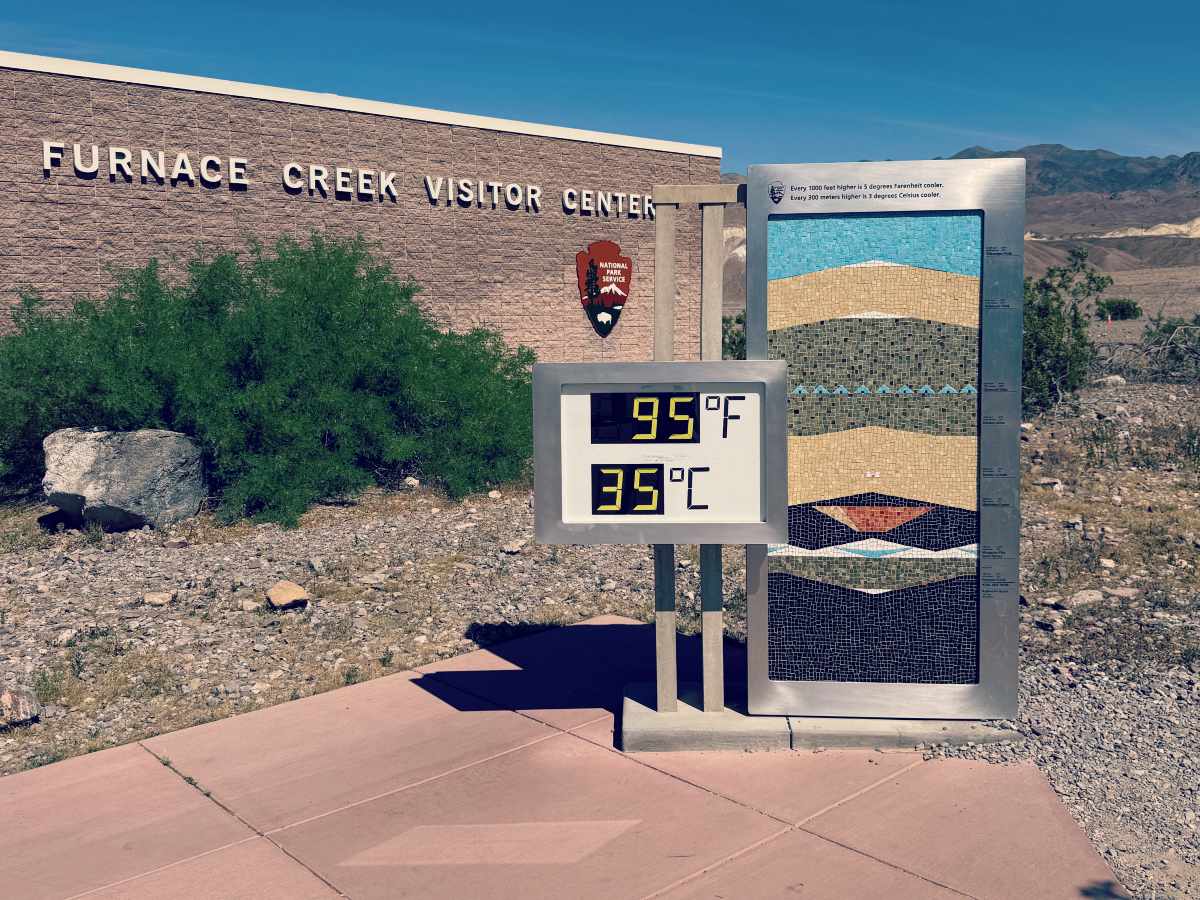
Just outside the Visitor Center, you’ll find the well-known thermometer often seen in photos, and during summer, it almost constantly shows temperatures above 100F (40˚C).
In the Furnace Creek area, you’ll find a hotel, restaurant, golf course, and gas station. About 136 people live there permanently, most of them members of Timbisha Shoshone Tribe, who have inhabited Death Valley National Park for over a thousand years.
Badwater Basin
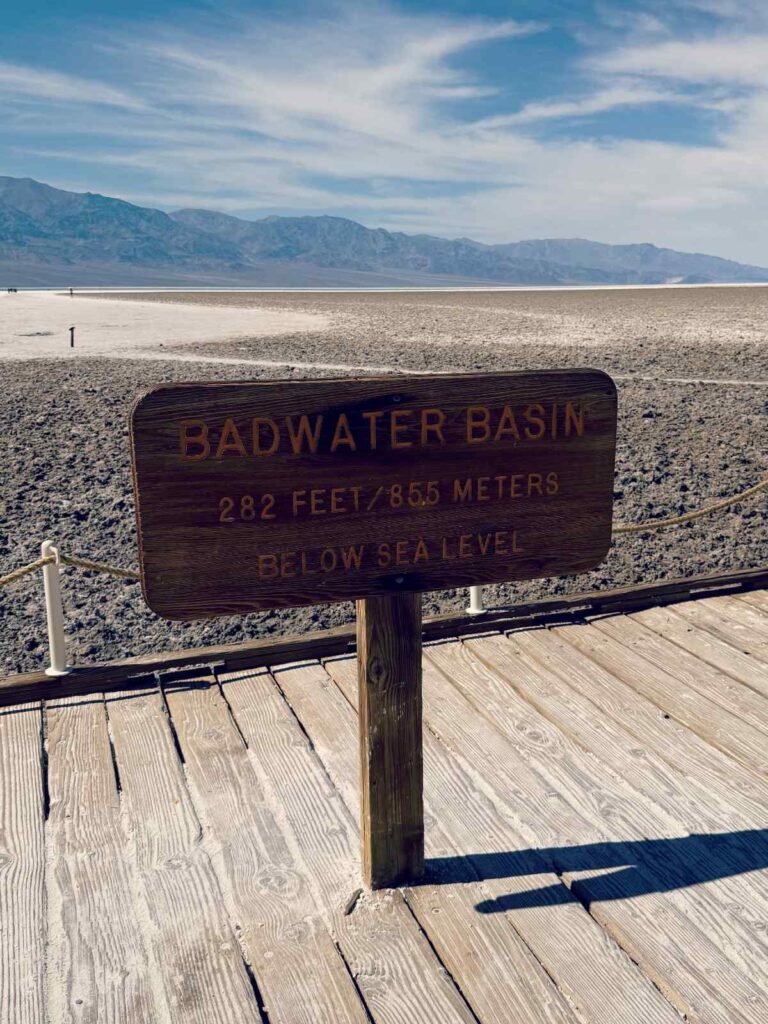
From the Visitor Center, head to the Badwater Basin which is the lowest point in North America and one of the most famous spots in Death Valley National Park. It sits 86 meters below the sea level. The area is a vast salt flat covered with salt and other minerals, with a small spring of salty water bubbling up at its edge.
According to one story, Badwater Basin got its name when a surveyor’s mule refused to drink from the spring because the water tasted so bad, likely due to its high salt content.
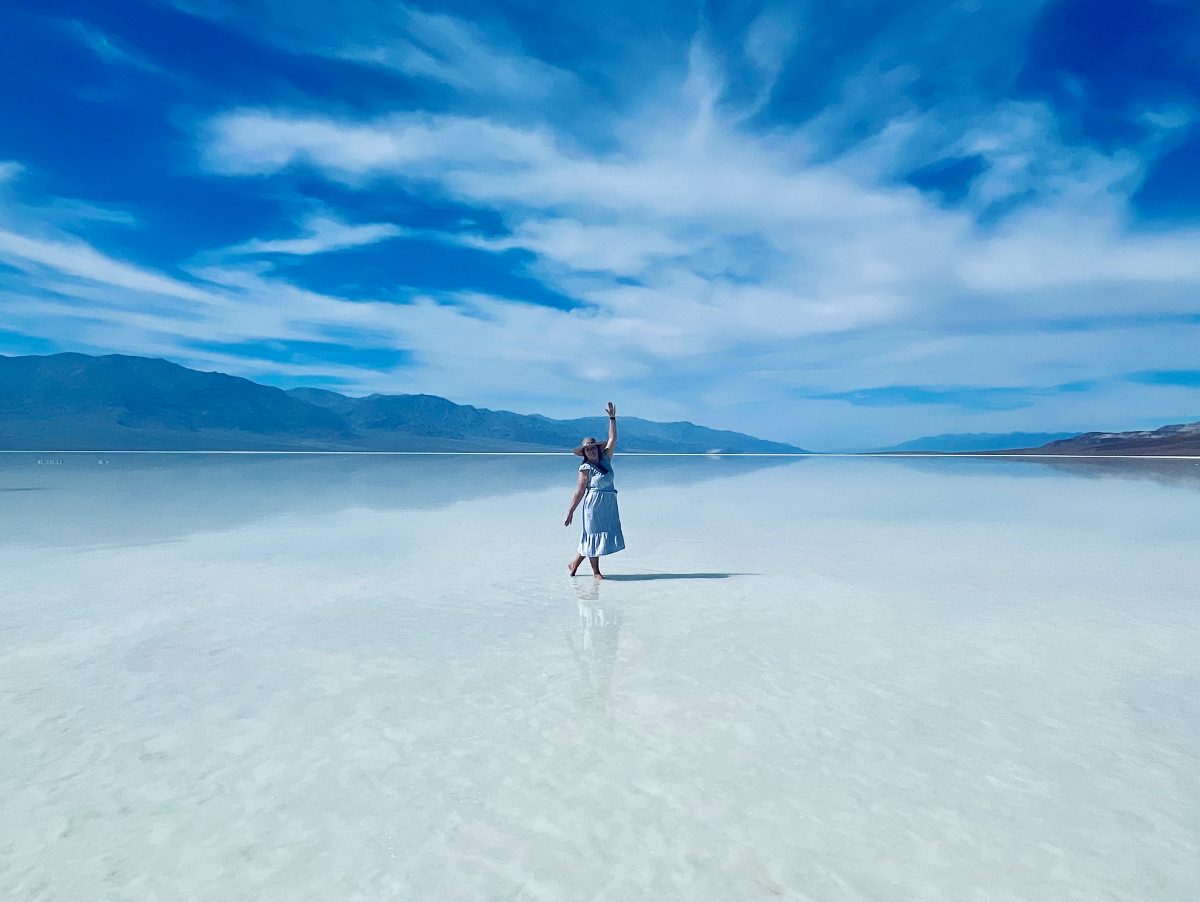
Roughly once every ten years, enough rain falls during winter to create a temporary lake on the salt flats called Lake Manly. We were lucky enough to witness this rare sight during our visit.
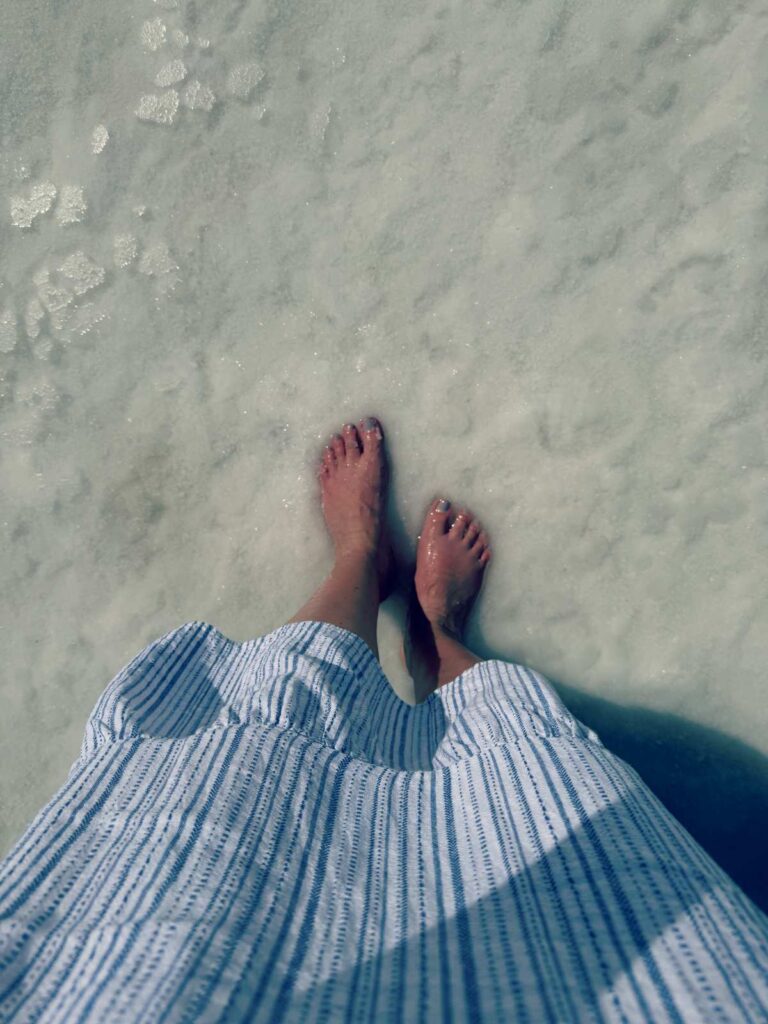
Normally, you can walk a 1 mile loop (1,6 km) across the salt flats, starting from the broadwalk. We didn’t go quite that far, as we were walking barefoot in the shallow water, and the sharp salt crystals quickly started to hurt. Still, seeing Lake Manly shimmering in the sunshine was an unforgettable experience and our kids loved playing there.
Devil’s Golf Course
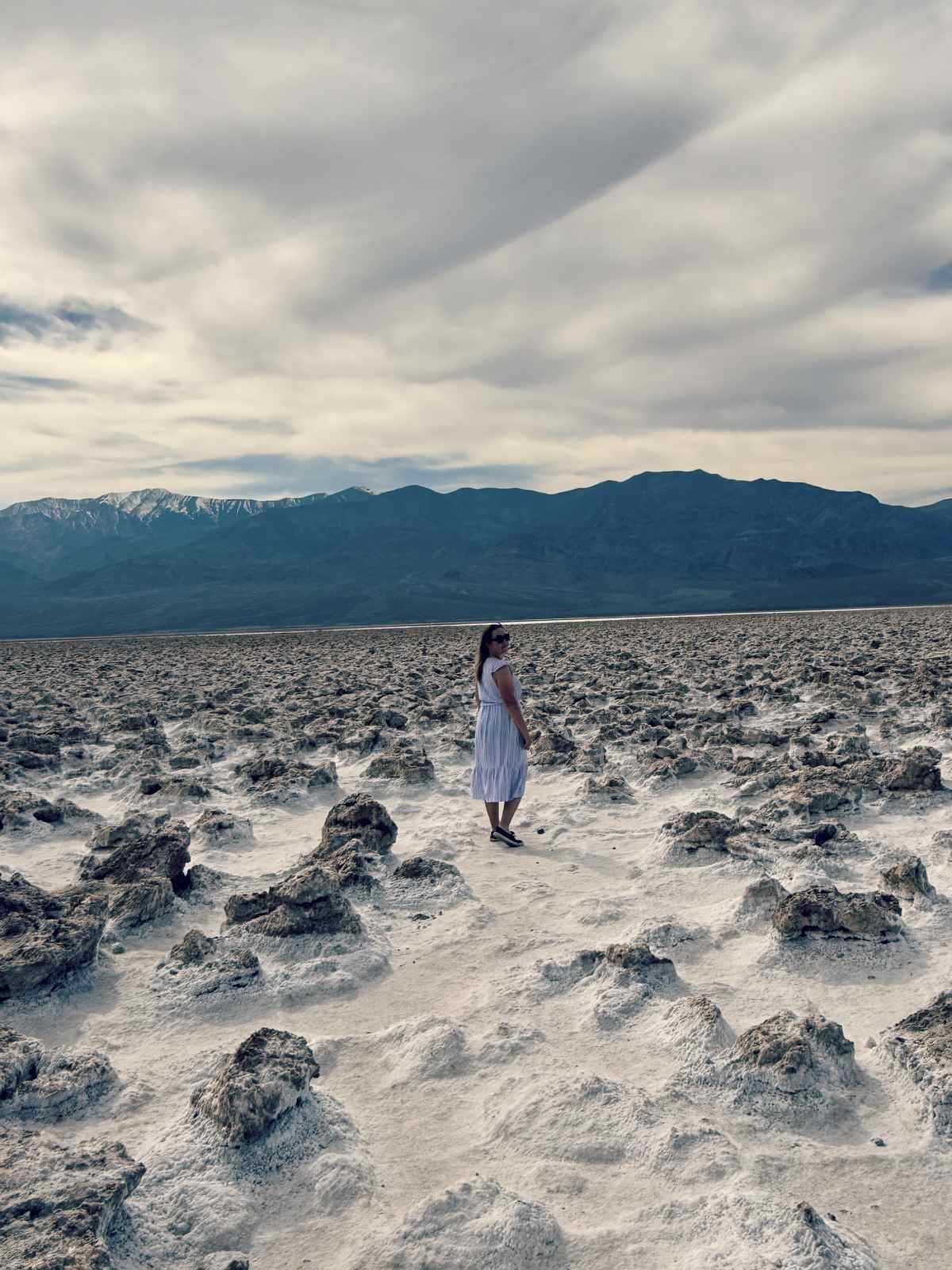
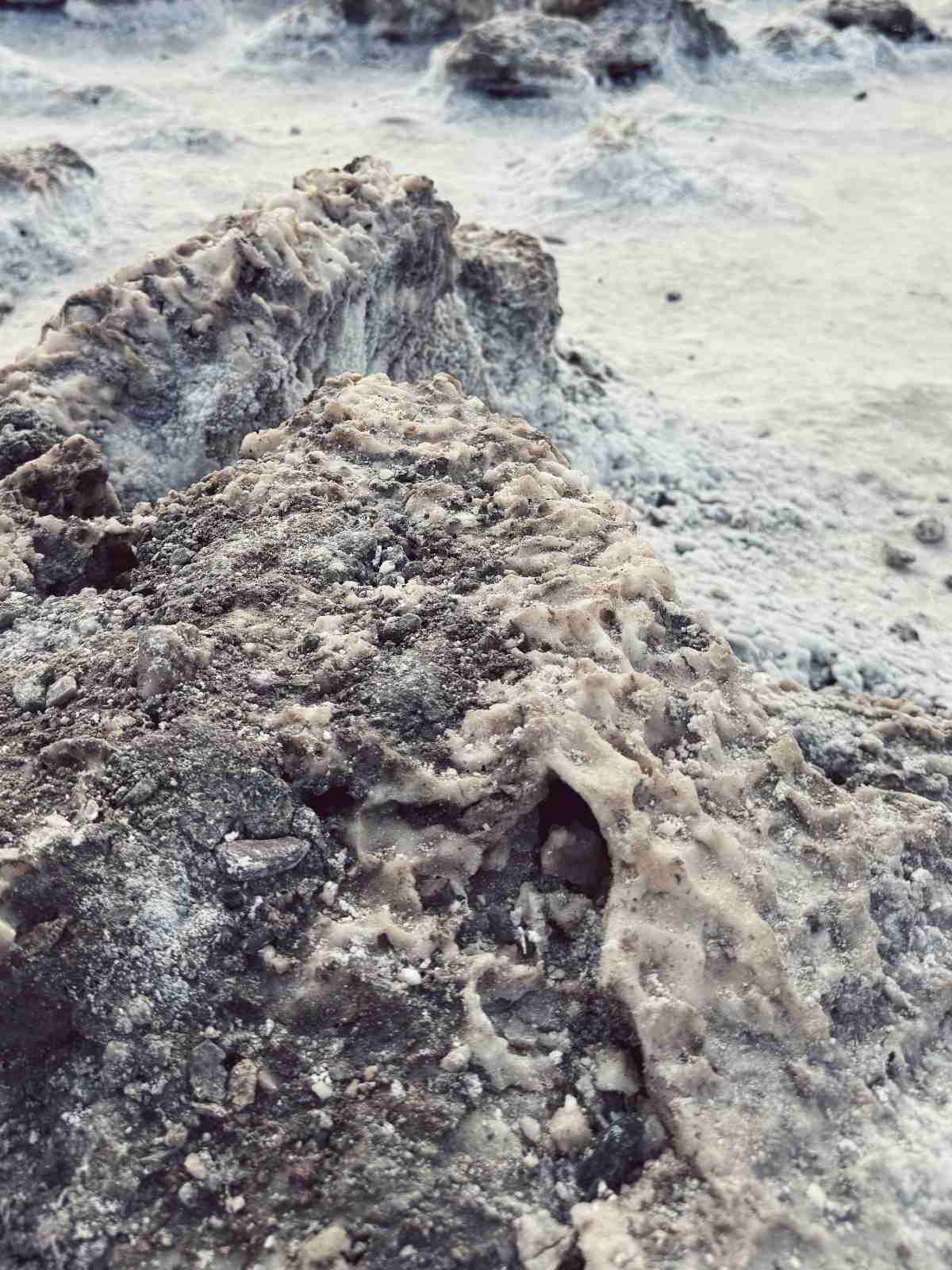
Devil’s Golf Course is located near Badwater Basin so it’s a logical next stop. It is known for its jagged salt formations and sharp crystals. Its rough, uneven surface it what gave it the name “Devil’s Golf Course”.
This isn’t an area for hiking as the formations are extremely hard and their edges sometimes razor sharp. Visitors are advised to be cautious, as a fall here would likely result in some cuts.
On a warm day, you can even hear the salt crystals crackling and popping in the heat.
Artist’s Drive & Palette
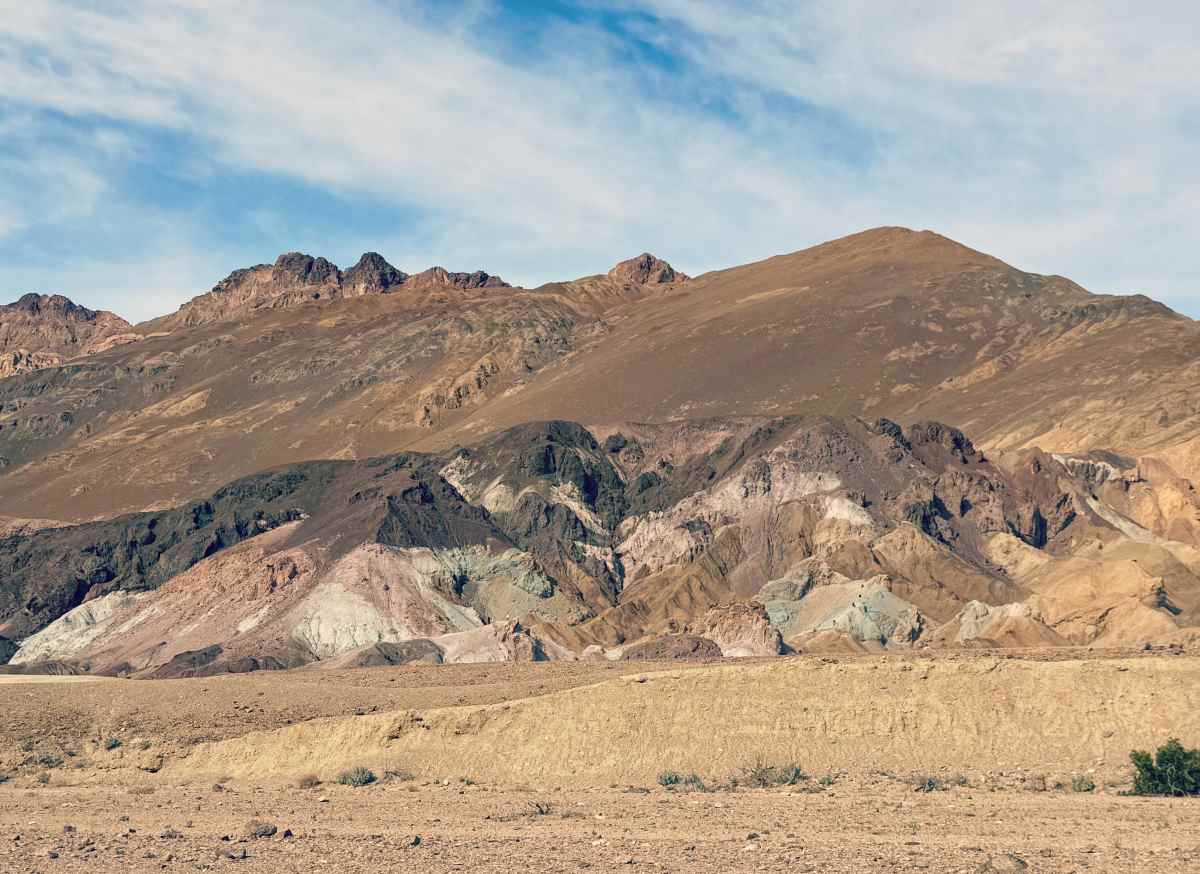
Artist’s Drive is a scenic 9-mile (14.5 km) drive in Death Valley that’s well worth 30-45 minutes of your time. This one-way road winds through colourful hills shaped by different volcanic minerals.
Make sure to stop at the few viewpoints along the way, especially at Artist’s Palette, to step out of the car to take a closer look at the scenery.
Fans of Star Wars Episode IV: A New Hope might recognise this area from the film.
Harmony Borax Works
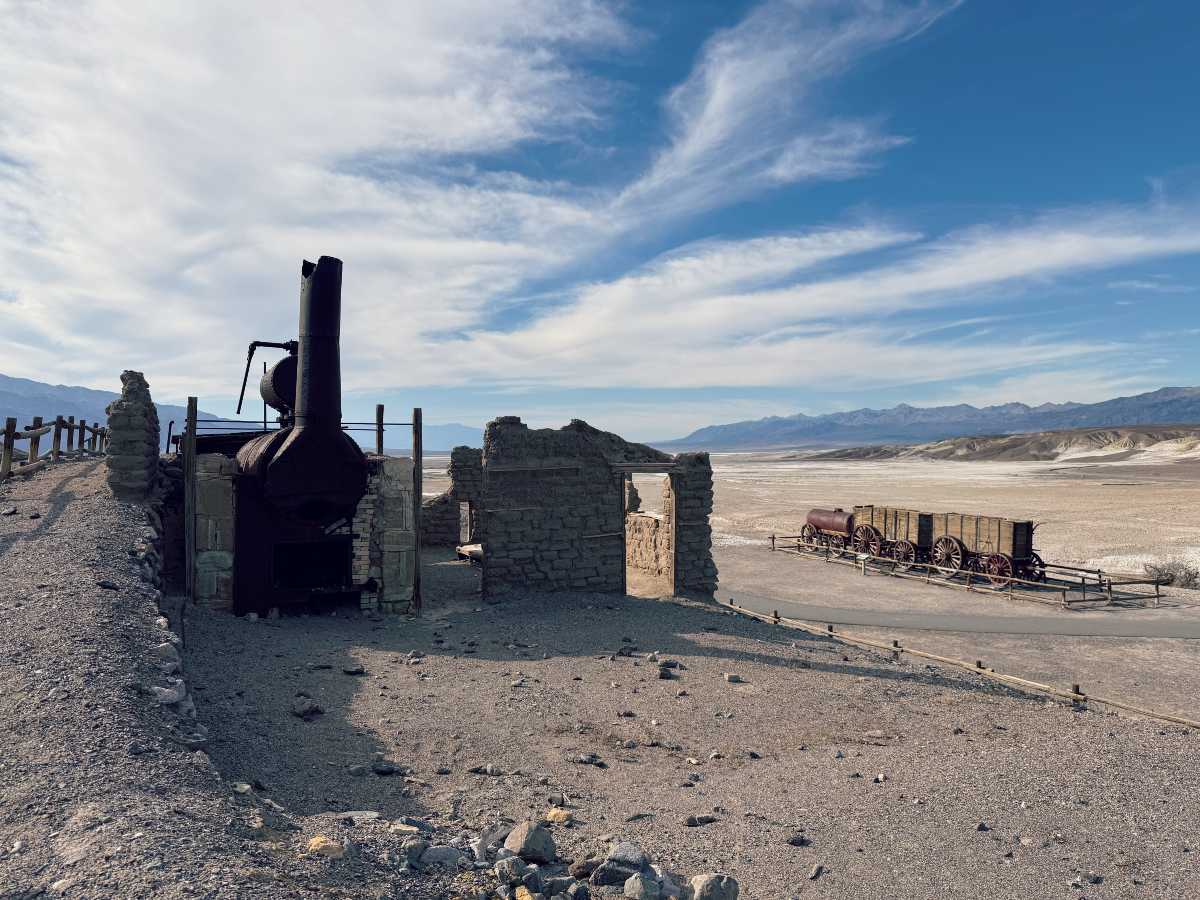
Next stop along the road is Harmony Borax Works which is a historic site where borax was mined between 1883 and 1889. Borax is a water-soluble mineral used in cleaning products, detergents, mold prevention, and even in repellents.
At Harmony Borax works, you can see old mining equipment and the wagons once used to transport borax. These wagons had two sections for the borax and a third for water, and moving them required a team of 20 mules.
The site is easy to explore via short and simple walking trail.
Salt Creek and Death Valley Pupfish
Salt Creek is one of the best places in Death Valley National Park to spot the rare Death Valley pupfish. There are five different varieties of these fish, and they’re easiest to see here from boardwalk built over the stream.
Salt Creek is part of the Amargosa River, which mostly flows underground, but surfaces in this area. The best time to see the fish is in spring, from February to April.
The Salt Creeks pupfish are believed to be remnants of a larger population that once lived in Lake Manly. They’ve adapted to the harsh desert conditions, surviving in salty water and extreme temperatures up to 116F (47˚C) in summer and near freezing in winter.
Death Valley pupfish is a critically endangered and protected species. Seeing them was one of the highlights for us on this trip, but it’s important to do our share to protect them. Staying on trails, following the park rules and leaving no trace while visiting the park is important. You can also support Death Valley Conservancy in their efforts to save the pupfish.
Other Death Valley pupfish species can be found in the Amargosa River, Cottonball Marsh, Saratoga Springs, and Devil’s Hole.

Mesquite Flat Sand Dunes
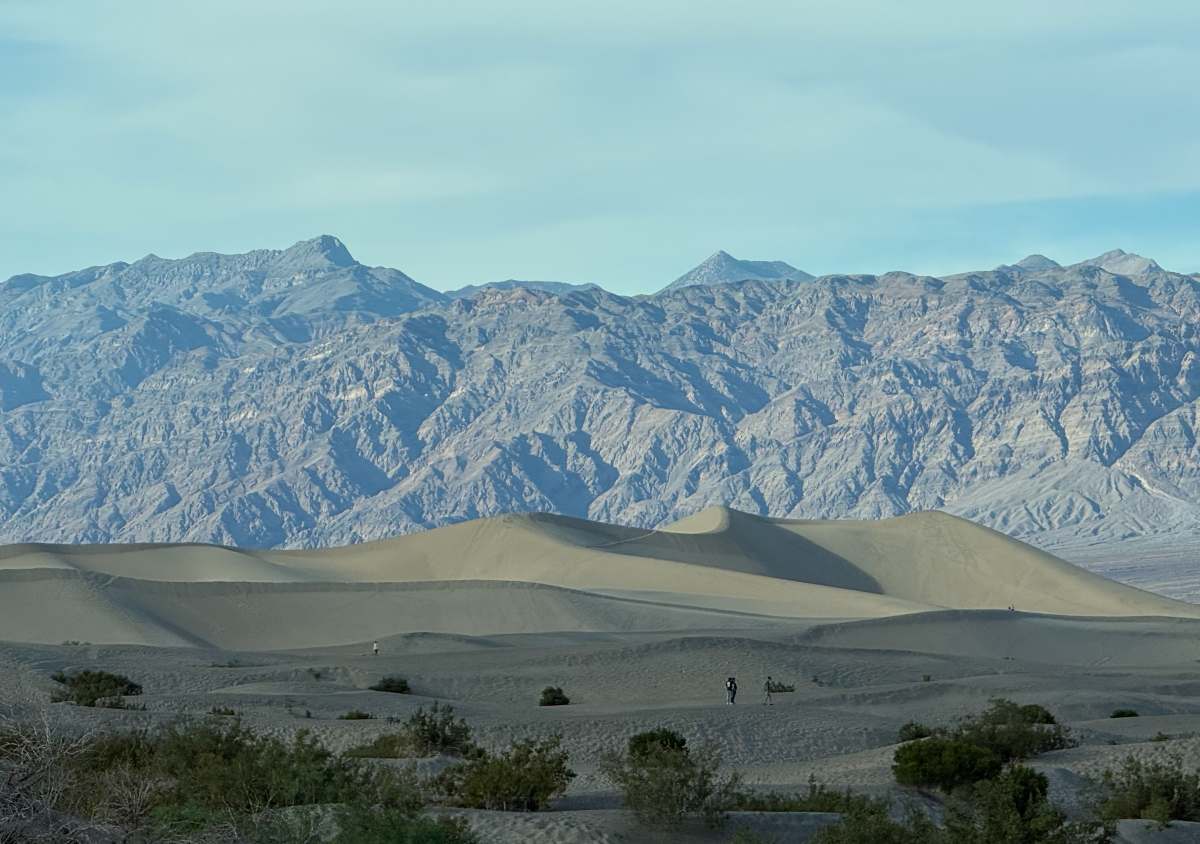
Mesquite Flat Sand Dunes are among the most iconic dunes in Death Valley. While sand is found in many areas of the park, dunes only form under specific conditions and these were created by erosion from the nearby mountains.
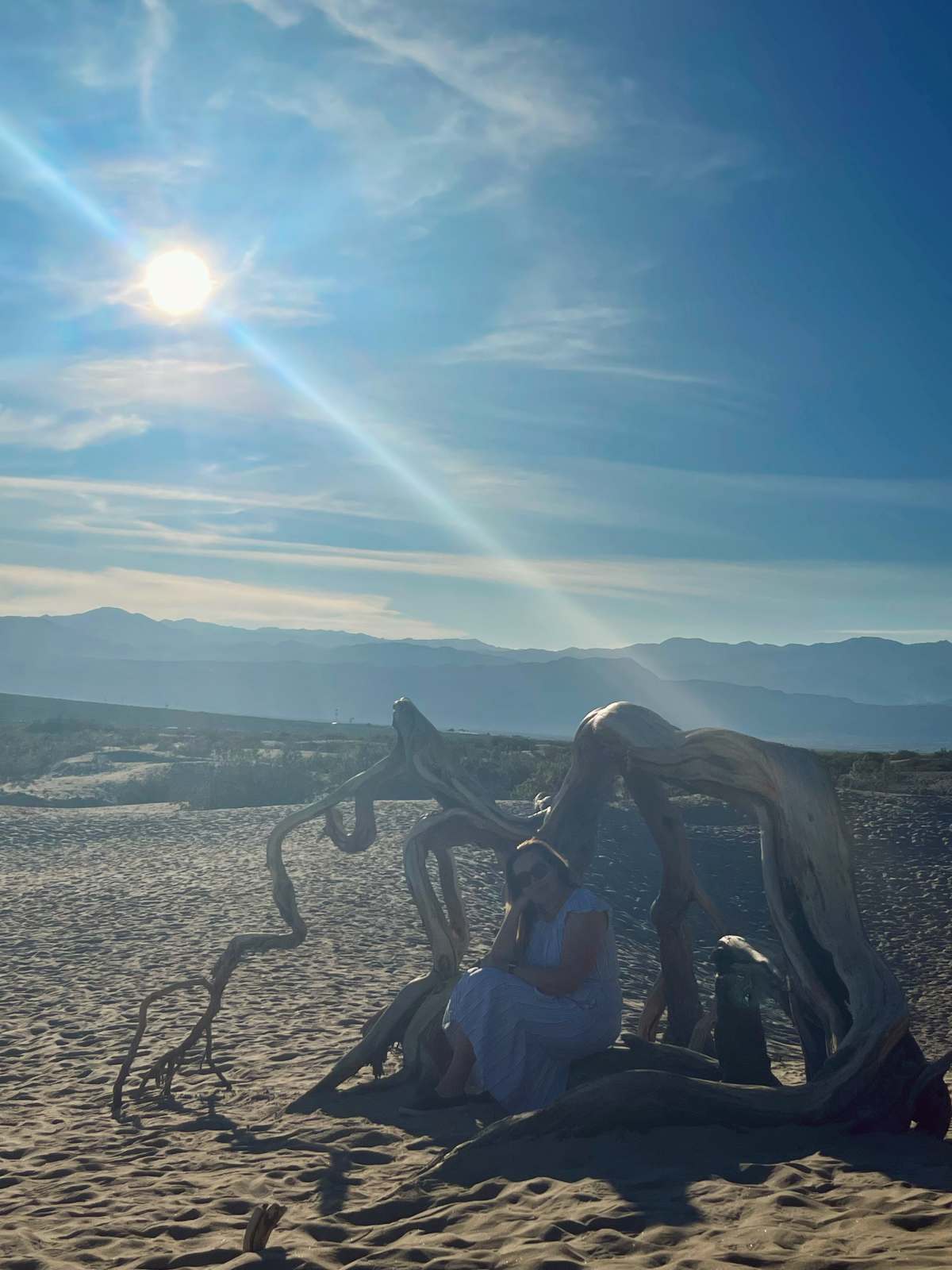
The dunes get their name from the Mesquite trees growing there. These twisted trees spread across the sand to avoid being buried beneath it. In winter, they’re bare, but in spring, they begin to bud and even produce small flowers.
The dunes are a great place for a walk, and many visitors come in the evening stargaze. Some even slide down the slopes on plastic sheets. We came here to see the sunset and our kids loved playing in the sand. We also spotted Blue death-feigning beetles that left funny tracks behind. They get their name from their habit of playing dead when touched.

Stargazing
For those staying overnight, Death Valley is an incredible place for stargazing. At night, the park gets completely dark. Even if your hotel or campsite has lights, you only need to drive short distance to find perfect darkness.
Scorpions
If you’re interested in wildlife and you staying the night in the park, it’s worth bringing a UV flashlight with you. With that you might spot scorpions glowing blue on the ground. They’re most active during the warmer months, which is likely why we didn’t see any during our visit.
Scorpions usually come out after dark, so they’re harder to find during the day. The Giant desert hairy scorpion found in Death Valley isn’t dangerous to humans, unlike the Arizona bark scorpion found in places like the Grand Canyon. Still, they are venomous and their sting can be painful, so it’s important to watch your step and avoid touching them.
You can also come across Giant desert hairy scorpion scorpions in Mojave National Preserve.
Father Crowley Vista Point – Rainbow Canyon
Father Crowley Vista Point overlooks Rainbow Canyon, an area that has been used for military training since World War II. Here, fighter pilots practice low-level flying through the canyon, making it one of the few places in the world, alongside the Mach Loop in the UK, where you can see jets flying below you.
We actually spotted fighter jets as soon as we arrived in Death Valley National Park, without remembering that training takes place here. Later, a server at our hotel told us that the real low-level flights happen specifically in Rainbow Canyon and Panamint Valley, while jets tend to stay higher over the park’s busiest areas. They also mentioned that training flights had increased significantly following recent U.S. military activity in Iran.
Because of its volcanic rock and colorful landscape, Rainbow Canyon is also nicknamed “Star Wars Canyon”, and parts of Star Wars were filmed here. Scenes from Top Gun and Top Gun: Maverick were also shot in the area. It was exciting because we have also toured Top Gun filming locations in San Diego, so seeing this was a cherry on the top.
Aside from plane spotting, Father Crowley Vista Point offers sweeping views over Panamint Valley. From the parking area, a short dirt road leads to the edge of the canyon, accessible by foot or car, with several great viewpoints along the way to watch jets and helicopters flying through the canyon.
We came here the next morning along the way out of the park. But you can also do this while entering Death Valley if you come from California.

⭐️⭐️⭐️
Death Valley is huge, and there’s far more to see than just these spots. Great hiking options for cooler weather include Natural Bridge Canyon, Zabriskie Point and Golden Canyon Loop. These are all places we still want to explore.
We had also hoped to visit The Racetrack to see the famous moving rock, but the drive is over three hours each way. A four-wheel-drive vehicle is required, as the road is extremely rough. In the end, we decided to save this for a cooler time.
Death Valley National Park
Where: Death Valley, CA 92328
Open: Always
Fee: $30 per vehicle
Check the current conditions and updates on opening times and prices by clicking on this box.
Best time to Visit Death Valley
The best time to visit Death Valley National Park is during the winter months and early spring. It’s best to avoid summer, as temperatures can become dangerously high and hiking is nearly impossible.
In winter, the weather is cooler and much more comfortable for exploring. That said, it’s still important to check forecasts and park alerts, as rain can sometimes cause flooding or hazardous conditions.
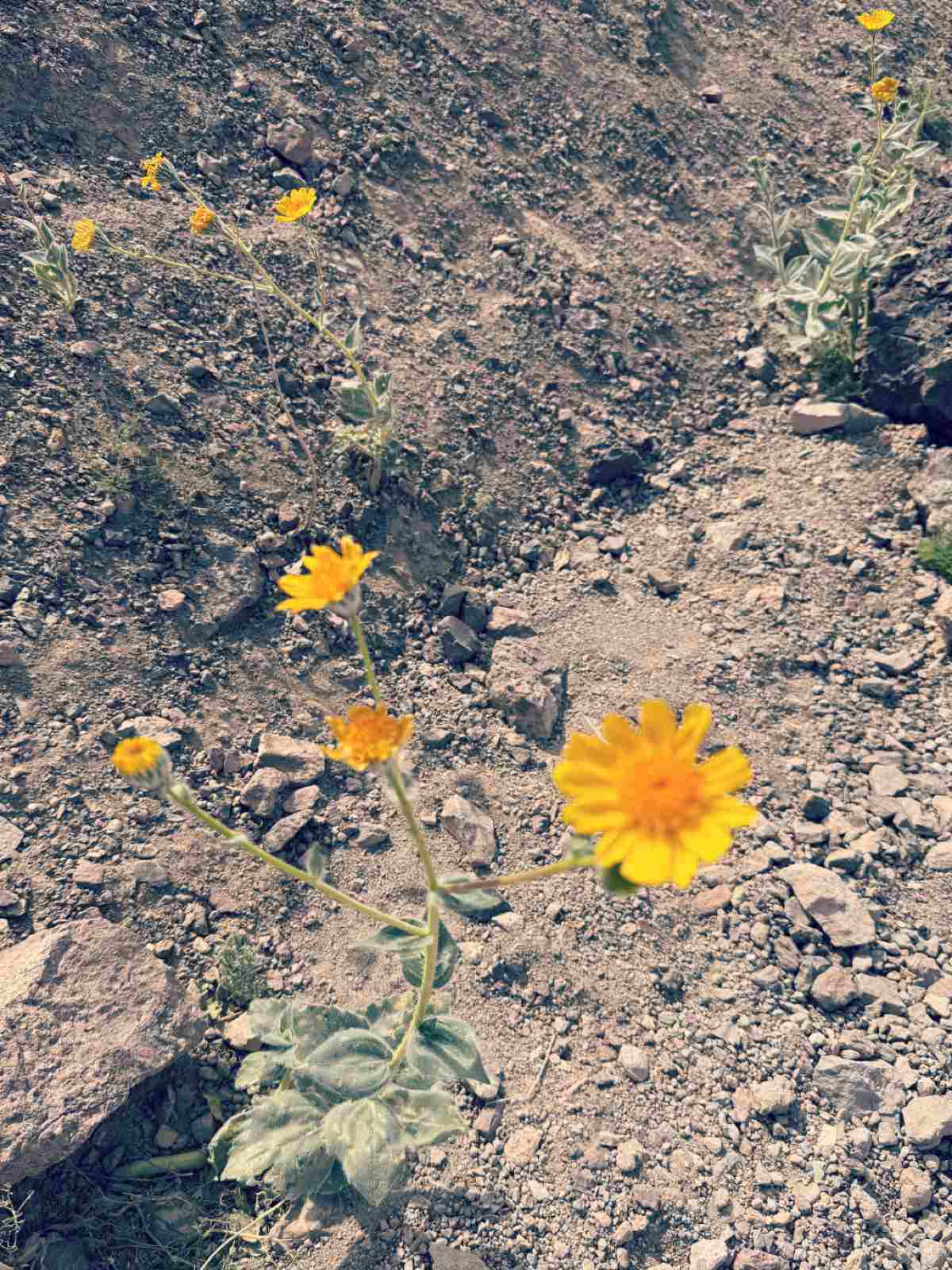
Early spring is especially nice, with milder temperatures and nature starting to wake up after winter. You may even catch desert wildflowers in bloom and spot more wildlife during this time.
No matter when you visit, come prepared; bring plenty of water, sunscreen, a hat, and sturdy shoes. It’s also a good idea to fill up your gas tank before entering the park, as fuel is more expensive inside.

Where to stay in Death Valley
There are only three hotels inside Death Valley National Park, and while they’re on the pricier side, they’re worth it. The park is vast, and nearby towns are hours away, so it’s best to stay inside the park or right on its edges.
The most popular options are The Ranch at Death Valley and The Inn at Death Valley, both located near the Visitor Center. This area is known as The Oasis at Death Valley, and it really does feel like an oasis with its green palm trees in the middle of the desert. Both hotels offer restaurants, like The Last Kind Word Saloon and The Toll Road Restaurant, and swimming pools. It’s also easy to explore the park from here.
The third hotel in the park is Stovepipe Wells Village, which also has a restaurant and pool, and sits conveniently along the main road.
On our trip, everyhting was fully booked due to the super bloom, so we stayed on the edge of the park at Panamint Springs Motel & Tents. They offer cabins, tents, and motel rooms. The cabins and tents are decent, while the motel itself is very basic. But the location and their restaurant; the Panamint Springs Resort Restaurant, are excellent.
There are also several campgrounds throughout the park.
🦂🦂🦂
A visit to Death Valley National Park is easy to combine with a trip to Las Vegas, especially if you’re driving from California. Parts of the park actually extend into Nevada.
From here, you can also continue along the Sierra Nevada and visit places like Devils Postpile at Mammoth Lakes, Mono Lake, or the ghost town of Bodie. If the mountain passes are open, you can even take Tioga Pass and add Yosemite National Park to your itinerary.
Closer to the park, you’ll also find Red Rock Canyon State Park, which we visited on this same trip, and Manzanar, a former internment camp.
There’s truly a lot to see in California’s desert landscapes! Have you visited any of these places?
🇺🇸 OUR USA TRAVEL RESOURCES 🇺🇸
🗝 Hotels & Vacation Rentals: We usually find the best hotel deals here and also check this site.
Vacation homes and condos we book through VRBO.
🚗 Car Rentals: We compare rental car prices on DiscoverCars to find the best deals worldwide.
🗺 Tours & Activities: We usually book tours through Viator or GetYourGuide.
Both have huge selections and easy cancellation.
🎫 Concerts & Events: We buy event tickets through Ticketmaster, one of the most reliable platforms.
✈️ Flights: AirHelp has helped us claim compensation for delayed and canceled flights.
It can sometimes help finding better prices and also protects Wi-Fi when traveling.
📞 Travel eSIM & Data: For mobile data abroad, we use Yesim so we can navigate and stay connected.
🩹Travel Insurance: We always travel with insurance and use SafetyWing on our trips.
For more pictures and videos, check out our Instagram @paulagaston


